A robotic chef can repeat a narrow cooking task, but that alone doesn't show it can run a kitchen station. The supplied brief names no robot, restaurant, trial, price, date, or source, so the useful question is how to test a replacement claim without filling the gaps with guesses.
- A demo proves one task under chosen conditions.
- A line cook handles changes, timing, cleaning, and handoffs.
- The missing proof is performance across a full service.
Start with the station, not the robot
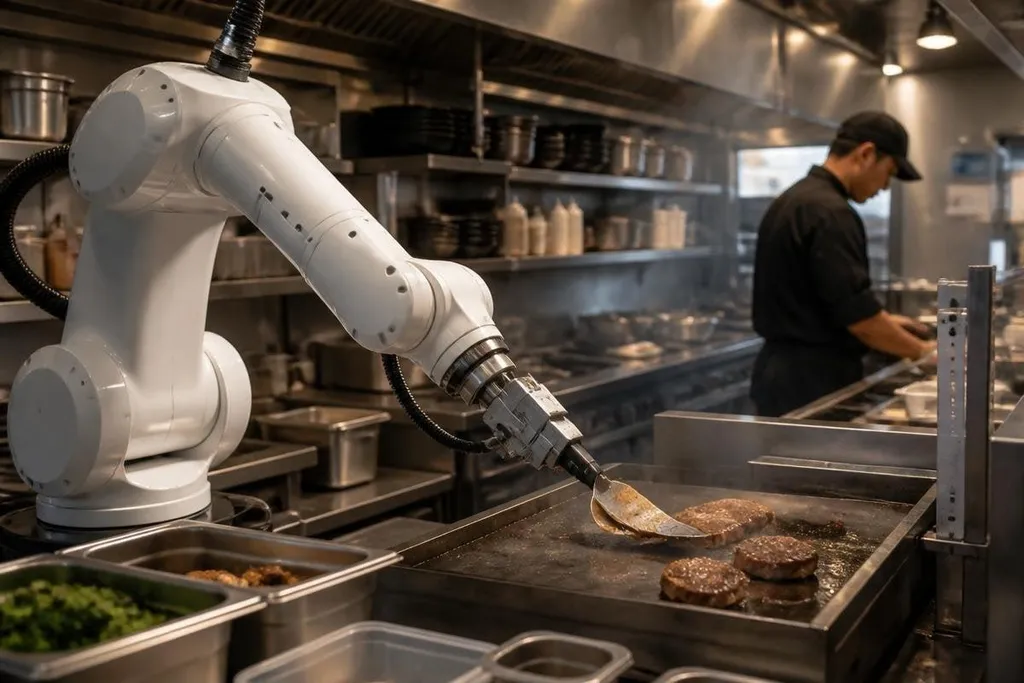
A line cook may portion ingredients, cook several orders, check doneness, respond to changes, clean tools, and pass food to the next station. Any robot aimed at that job needs a clear task list before anyone can compare it with a person.
The list should name the equipment, ingredients, cooking method, order flow, and safety steps. A robot that dispenses sauce has solved one part of a station. It hasn't shown that it can manage the station around it.
That distinction matters for restaurant owners. Buying a robot for one repeatable motion could leave the hard work with the same staff, while adding setup, cleaning, repairs, and training.
What a fair test would record
A useful trial would run during normal service, not only in an empty kitchen. The test should record the same measures for the robot and the line cook, using the same menu and order process.
Track these points:
- Orders completed during a service period
- Time from order release to handoff
- Portion and temperature errors
- Ingredient waste and food left unsold
- Staff time spent loading, cleaning, and fixing faults
- Stops caused by safety checks or sensor errors
Each measure answers a cost question. A robot may reduce cooking time while adding so much loading work that the restaurant gains little. A system may also keep a steady pace but fail when an ingredient runs out or an order changes.
The trial needs a clear failure rule. If the robot stops, the record should show why, how long the stop lasted, and who restored the station. Without that record, a smooth video can hide the work performed by people outside the frame.
The easiest work to automate is repeatable work with fixed inputs and a narrow range of outcomes. Portioning, timed stirring, dispensing, and moving a pan along a set path fit that description in principle.
Each claim still needs a named machine and a recorded test. More difficult work includes judging food by sight, changing a recipe after an ingredient problem, and coordinating several orders that finish at different times.
These jobs depend on sensors, software, kitchen layout, and staff decisions. A source must show the exact system before anyone can say how well it handles them.
A robotic chef can plate a meal and still need a cook to load ingredients, clear faults, and check the food. Reports on robotic kitchens from Robot24.com can name the machine, recipe, shift length, and human help recorded during the trial before the cost question begins.
The cost question comes after the work test
No price was supplied here, so a purchase case can't be made. The cost would include the robot, gripper or cooking tool, software, installation, training, cleaning, service, spare parts, and the staff time needed when the system stops.
A restaurant also needs to compare the robot with the job it changes. If one cook still loads ingredients and watches every cycle, the machine may reduce one task without reducing headcount. If it runs a full station with limited help, the savings case becomes easier to check.
I’d reject any claim that a robotic chef can replace line cooks until a named system passes a full service test with those records.
Decision checklist for a restaurant owner
Before signing a purchase order, ask for:
- The exact model and cooking tasks covered
- A service trial using your menu and kitchen layout
- Measured order times and error counts
- The full cleaning and loading procedure
- A repair plan, response time, and spare-parts list
- A written account of tasks still handled by staff
Those answers turn a broad replacement claim into a question with a testable result. The next useful proof is not another short clip. It is a dated kitchen trial that shows the robot working through one full service, including the stops.